
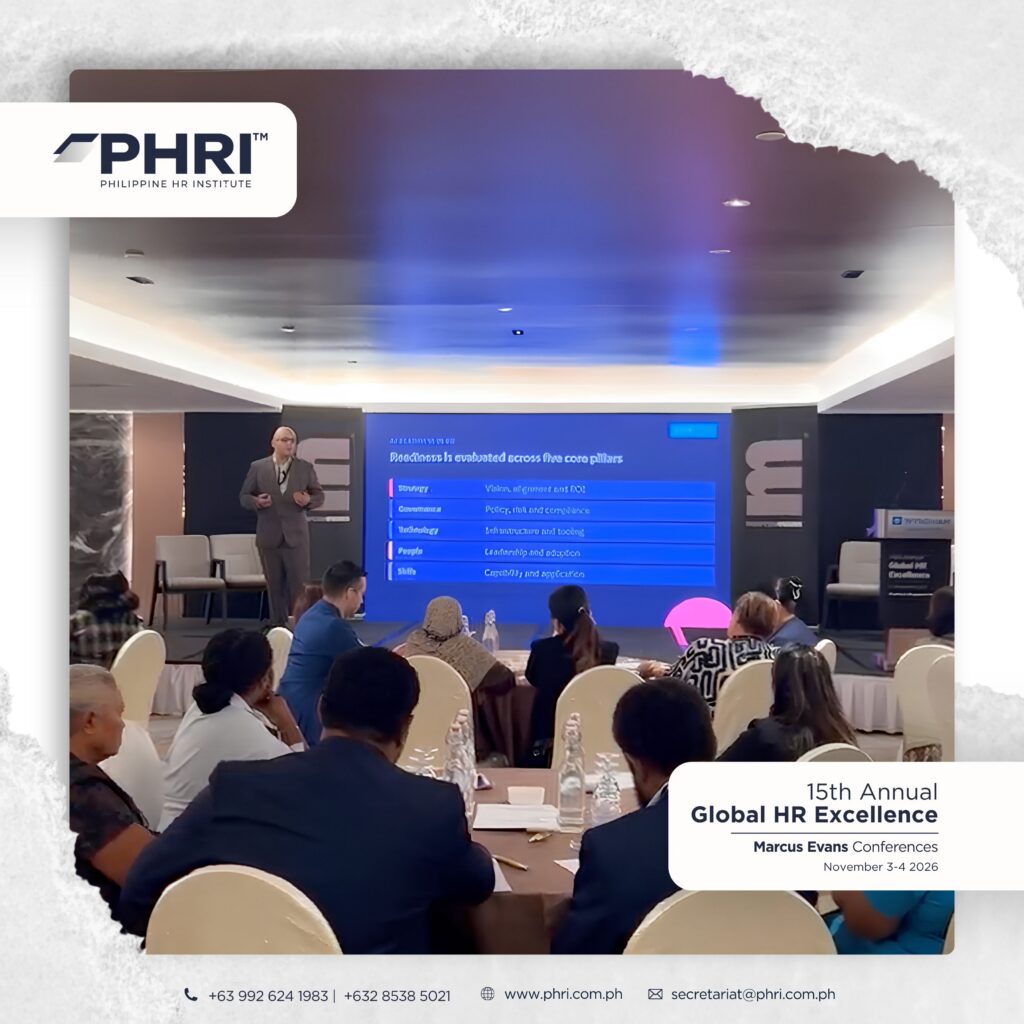
The 15th Annual Global HR Excellence gathered distinguished human resource leaders, People and Culture executives, and workforce strategists for three days of discussions on the evolving landscape of human resource management. Held from November 3 to 5, 2026, at the Wyndham Singapore Hotel, the event provided a platform to exchange insights and explore strategies addressing emerging workforce challenges.
Discussions centered on artificial intelligence (AI), workforce intelligence, skills-based talent management, employee wellbeing, and organizational resilience. Across presentations, panel discussions, and interactive activities, a recurring message emerged: the future of HR lies in embracing technological advancement while keeping people at the heart of organizational transformation.
Advancing HR Through Technology and Workforce Intelligence
The first day explored how AI is reshaping HR strategies and organizational operations. Dr. Dieter Veldsman, Chief Scientist: HR and Organisational Development at AIHR, Netherlands, highlighted the transition toward AI-first HR functions, emphasizing responsible adoption and the integration of technology into broader business strategies. Meanwhile, Priyanka Anand of Ericsson, India, examined the opportunities of managing a multigenerational workforce through inclusive practices that encourage collaboration.
The discussions also highlighted the growing importance of skills-based organizations, continuous learning, and internal mobility. Christopher Gunawan, Amran Mohd Tomin, and Suman Sharma explored how recognizing employee capabilities can help organizations build more adaptable workforces. Employee wellbeing was another central theme, with Dr. Andrew Tay of the National University of Singapore presenting The WellNUS Journey and Heena Bose and Eddie Lin of Pacific Prime Singapore discussing sustainable healthcare provisions and employee benefits.
Reimagining HR for an AI-Driven Workplace
The second day continued the conversation on organizational transformation. Alec Bashinsky of The Josh Bersin Company introduced the HR 2030 model, exploring how interconnected AI agents could reshape HR operations and deliver more personalized workplace experiences.
Complementary discussions examined the human dimensions of transformation. Badrol Izam of Boutsed highlighted the importance of maintaining trust during difficult workforce decisions, while Amana Lim, Southeast Asia’s Fastest Swimmer and 21-time SEA Games Gold Medalist, shared perspectives on discipline and resilience. Dr. Maria Pressentin of Rohde & Schwarz and Deepesh Agrawal of Edstellar further explored skills-first workforce planning, organizational agility, and effective employee learning.
Additional sessions covered employee lifecycle experiences, diversity and inclusion, emotional intelligence, and psychosocial risk management. Delegates also participated in an organizational change simulation, applying their insights to challenges involving stakeholder alignment, communication, and employee readiness.
Throughout the event, participants had opportunities to network and exchange insights. Moreover, the comprehensive program brought together government, business, and HR leaders to explore AI’s impact on the future of work, workforce transformation, employee well-being, and leadership. The discussions emphasized preparing people for change while promoting inclusive growth, workforce resilience, and human-centered innovation.
Preparing for the Future of Work
The third day featured four workshops focusing on workforce planning, organizational design, future workforce scenarios, and successful implementation. These sessions encouraged participants to examine emerging business demands, anticipate workforce requirements, and strengthen organizational capabilities.
Moving Forward: A People-Centered Future of HR
Ultimately, the 15th Annual Global HR Excellence reinforced the growing responsibility of HR leaders in building organizations that are both technologically advanced and people-centered. Across three days, industry experts emphasized that successful transformation extends beyond automation and operational efficiency. It requires connecting technological innovation with employee wellbeing, continuous development, inclusion, and leadership accountability.
As organizations prepare for 2027 and beyond, one message remains clear: while technology will continue to redefine how work is performed, the success of organizational transformation will depend on how effectively people are understood, empowered, and brought together.